
Hidden Inflammation: The Real Reason Millions of Adults Are Bloated, Constipated, and “Stuck” Every Day
If you've been told it's “just IBS,” “just stress,” or “just part of getting older,” read this short article carefully before you reach for another probiotic or laxative.
 Written by Nutr. David J. Harolds
Published Mar 12, 2024 · 8 min read
Written by Nutr. David J. Harolds
Published Mar 12, 2024 · 8 min read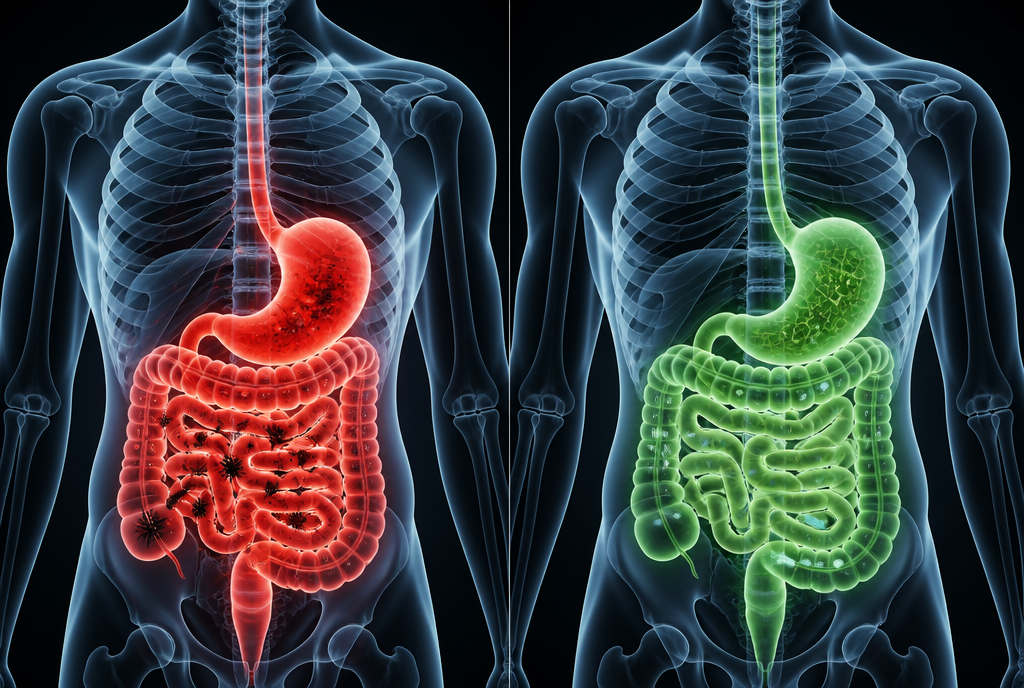

For the past several months, I've been researching what gastroenterology journals are now calling one of the most under-diagnosed gut conditions in modern adults.
It doesn't show up on a standard blood panel. It doesn't appear on a colonoscopy. And it isn't anything most doctors are trained to test for.
But peer-reviewed research suggests it's affecting tens of millions of adults right now. And it may be the reason so many of us have spent years bloated, exhausted, or constipated, without a single doctor being able to give us a real answer.
It's called hidden, chronic gut inflammation. After going through dozens of published clinical studies, including research from Harvard, Johns Hopkins, and peer-reviewed journals like Phytotherapy Research and Food Science & Nutrition, what I found is that the medical literature has known about this for years. It just hasn't filtered down to most routine doctor's appointments yet.
But before we get into the science, let's be honest about something first.
The Shocking Root Cause Most Adults Have Been Missing for Years
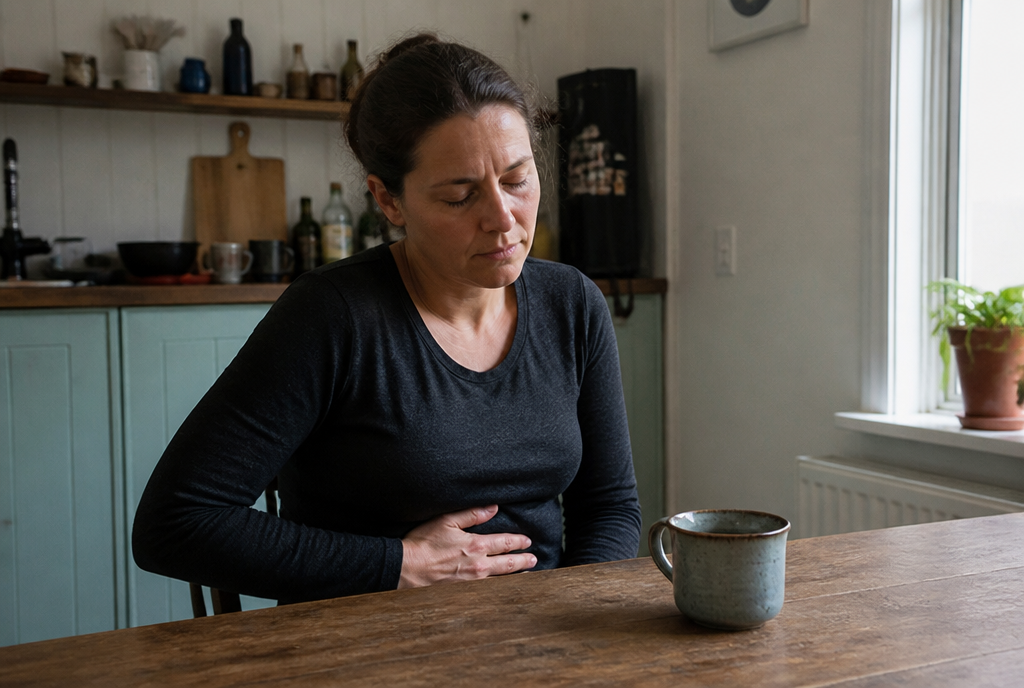
What if I told you that the bloating you feel by 4pm, the constipation that always comes back, the “stuck” feeling that no amount of fibre, water, or magnesium seems to help, and the mornings where you wake up feeling heavy in your gut even though you haven't done anything, isn't actually a digestion problem at all?
What if it's an inflammation problem that's been quietly hiding inside your gut for years, slowly damaging the gut lining, slowing everything down, and disguising itself as a dozen different symptoms so well that even your doctor couldn't connect them?
That's exactly what the published research has been showing for over a decade. And it's why so many people have spent years going from probiotic to probiotic, from FODMAP diet to magnesium citrate, from peppermint capsules to antispasmodics, and never actually fixed anything. They were treating the symptoms instead of the root cause.
How Common Is This, Really?
According to large published population studies, up to 1 in 3 adults experience symptoms of IBS: bloating, irregular bowel movements, constipation, urgency, gas, and abdominal pain that comes and goes for no clear reason.
But here's where it gets interesting. A 2024 review in Frontiers in Medicine concluded that what we call “IBS” in clinical practice is, in many patients, a downstream symptom of low-grade chronic gut inflammation, not a separate condition. The bowel itself is reacting, irritated, slowed down or sped up depending on which inflammatory pathway is dominant in that gut at that moment.
In other words, the “IBS” label describes what you feel. It doesn't explain what's actually happening. And that's why standard testing keeps coming back “normal.” The blood panels look for serious diseases. They don't measure the low-grade inflammation quietly damaging your gut lining day after day, or the bacterial overgrowth producing the toxins your immune system is fighting. So you get sent home with a leaflet, a fibre supplement, and the polite suggestion to “try to manage stress.” And the inflammation continues.
Why This Has Been So Easy to Miss
There's a reason chronic gut inflammation gets missed in standard medicine. It's silent. Unlike a swollen ankle or a red, inflamed cut that you can see and feel, inflammation inside your gut wall doesn't announce itself. It doesn't show up on a colonoscopy. It doesn't trigger the standard inflammation marker (CRP) on a blood test unless it has reached an acute, system-wide level.
But research published in the journals Gut and Alimentary Pharmacology & Therapeutics has now repeatedly confirmed that low-grade gut inflammation is enough on its own to cause a long list of everyday symptoms.
- Daily bloating
- Constipation that refuses to ease
- “Stuck” stool that takes 20 minutes to pass on a good day
- Alternating diarrhoea and constipation
- Reflux that comes back no matter what you eat
- Uncontrollable sugar cravings, especially at night
- A heaviness in your gut every morning
If you experience two or more of these regularly, you are likely living with chronic gut inflammation and don't even know it. It's that common, and that easy to miss.
What Most People Try (And Why It Doesn't Work)
Here's the cruel part.
- Probiotics add good bacteria, but they don't reduce inflammation, and they don't remove the bad bacteria causing it in the first place.
- Fibre supplements bulk up stool but don't touch inflammation. For an already-inflamed gut, more fibre can make things worse by feeding the wrong bacteria.
- Antispasmodics relax the gut muscles but don't address why those muscles are spasming.
- Low-FODMAP diets reduce fermentation by cutting trigger foods. Real short-term relief, but the moment you eat a fun food, the symptoms come back.
- Laxatives force the bowel to empty, damage the gut lining over time, and don't touch the bacteria or inflammation that caused the constipation.
Every one of these treats something downstream of the real problem. Like draining a flooded house without fixing the burst pipe, the water keeps coming back. Until you address the inflammation, nothing fundamentally changes.
So What's Actually Causing the Inflammation?
Most articles get this wrong. They'll tell you it's “stress,” or “modern diets,” or “a leaky gut,” without explaining what that means. But when you go through the published research, the picture is much clearer. Chronic gut inflammation, in the vast majority of cases, is driven by an imbalance in the bacteria living inside your gut, specifically a category scientists call gram-negative bacteria.
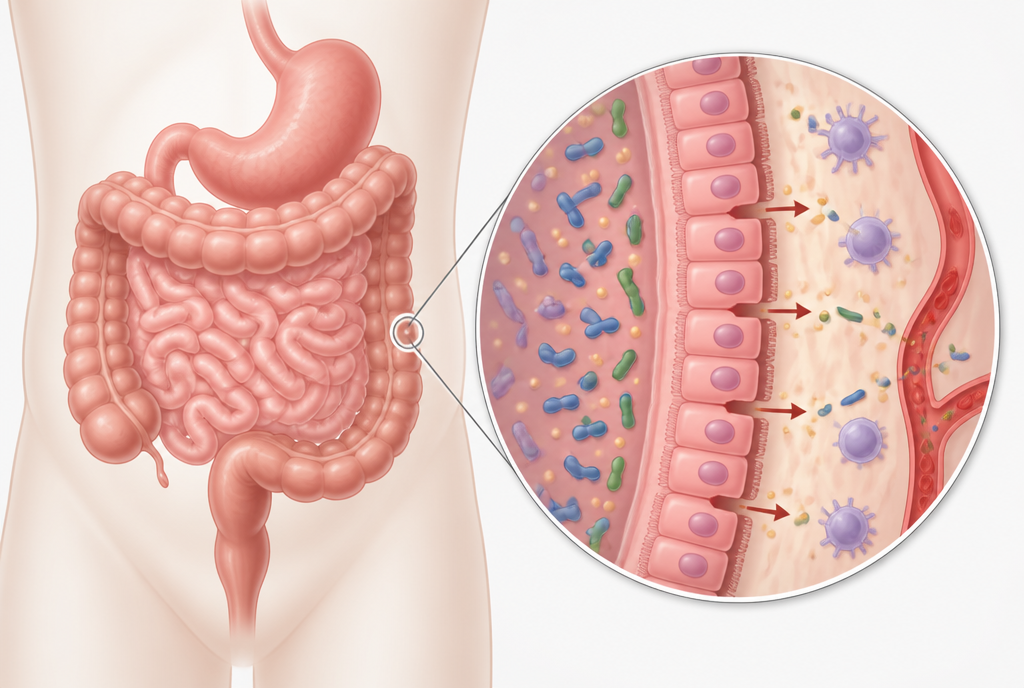
Your gut is home to roughly 100 trillion bacteria, more than there are cells in the rest of your entire body. When they're in balance, your gut works: you digest food, absorb nutrients, and feel light and energetic. But when the bad ones start to outnumber the good ones, something dangerous happens.
The harmful bacteria begin releasing tiny molecules called endotoxins, the toxic waste products of bad bacteria living and dying inside your gut. When your gut lining is healthy, these stay where they belong and get flushed out with your stool. But when the lining is even slightly inflamed or damaged, those endotoxins leak through the wall and into your bloodstream.
The moment they enter your bloodstream, your immune system reads them as a serious threat, because they look almost identical to a bacterial infection. So your body fires up an immune response. Inflammation goes up. And this happens every single day, after every meal, year after year, quietly damaging your gut, liver, joints, skin and brain.
Bad bacteria → endotoxins → leaky gut → systemic inflammation → more bad bacteria.
Why This Cycle Is So Hard to Break
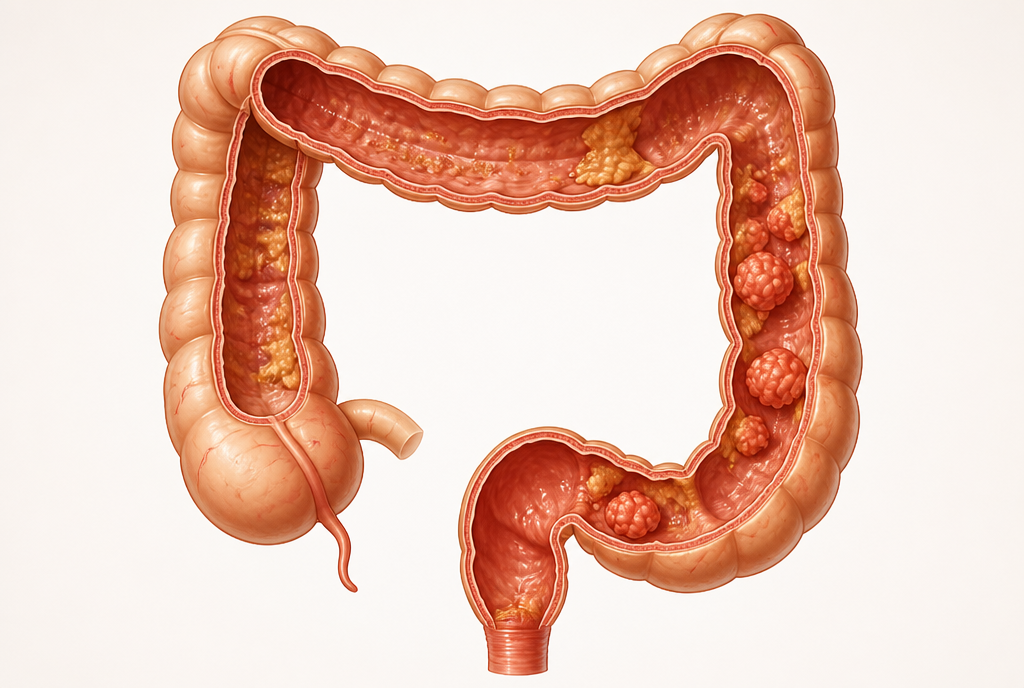
Bad bacteria don't just float around in your gut. They build a protective shield around themselves called a biofilm, a microscopic suit of armour they construct to defend against your immune system, antibiotics, and anything else trying to kill them. This is a major reason chronic gut overgrowth is so hard to clear.
Probiotics can't penetrate the biofilm. A 2014 clinical trial by Dr. Victor Chedid and his team found prescription antibiotics (specifically rifaximin) cleared bacterial overgrowth in only 34% of patients, leaving two-thirds with no improvement, plus a damaged microbiome from the antibiotic itself. And fibre? Bad bacteria love fibre. Adding more to an already-overgrown gut often makes bloating significantly worse.
This is the trap. You can't fix the inflammation until you address the bacteria, and you can't address the bacteria until you get through the biofilm. For decades this was considered an unsolved problem in gastroenterology.
But over the last twenty years, a growing body of clinical research has suggested that two specific natural compounds, used medicinally for over 2,000 years, when combined in the right ratio, can do something almost nothing else in modern medicine can: break through the biofilm, clear the bad bacteria living underneath it, and calm the inflammation those bacteria caused, all at the same time.
What the Research Has Actually Found
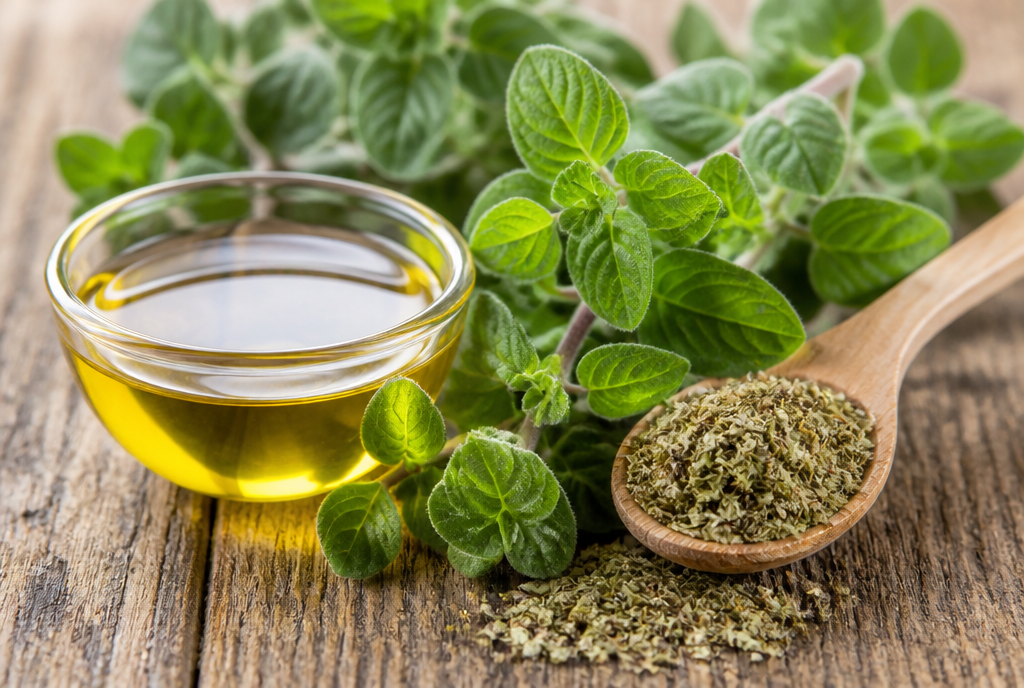
In 2018, researchers at Harvard Medical School, led by Dr. Mengyu Lu, published a remarkable study in Frontiers in Microbiology. They tested the active compound in wild oregano oil, a molecule called carvacrol, against drug-resistant bacterial strains that prescription antibiotics could no longer kill, including MRSA. The carvacrol wiped them out. Even more striking, after 20 consecutive generations of exposure, the bacteria still hadn't developed resistance to it.
The same team tested wild oregano oil head-to-head against rifaximin for SIBO patients. Oregano oil resolved overgrowth in 46% of patients. Rifaximin resolved it in 34%. The natural compound outperformed the prescription drug.
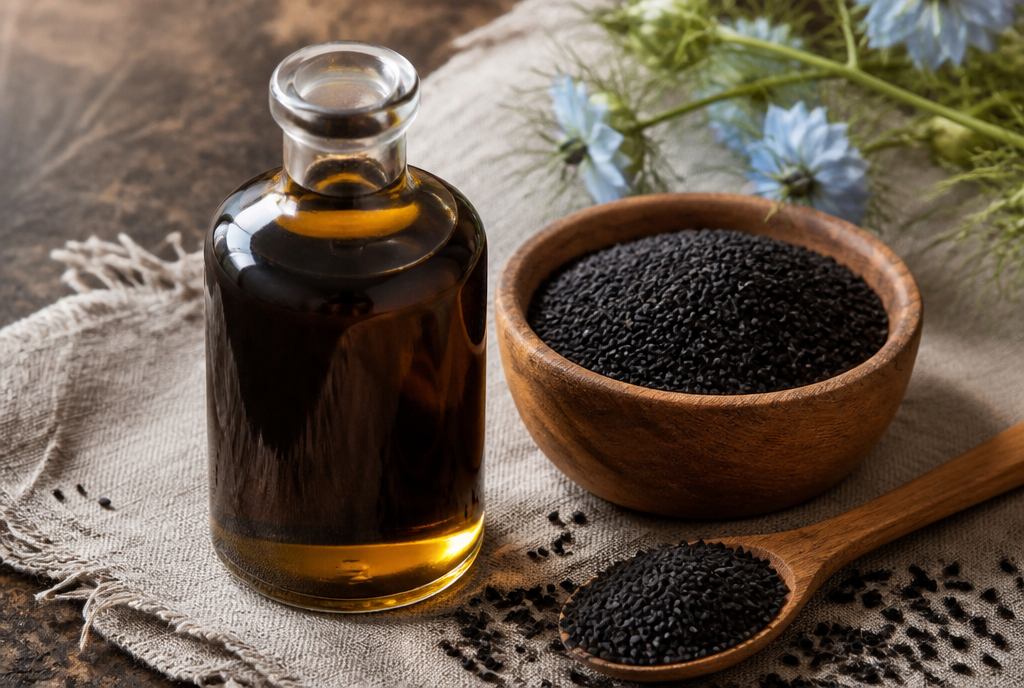
A 2021 meta-analysis of randomised controlled trials on black seed oil and its active compound thymoquinone found it significantly reduced CRP (the body's primary inflammation marker), TNF-alpha and IL-6 (the cytokines driving chronic inflammation and fatigue), while increasing total antioxidant capacity and superoxide dismutase, one of the body's main natural anti-inflammatory enzymes. In plain English: in real human trials, black seed oil measurably reduced inflammation throughout the body.
When you take both compounds together, carvacrol from wild oregano oil and thymoquinone from black seed oil, something extraordinary happens. The carvacrol dissolves the biofilm and clears the bacteria. The thymoquinone calms the inflammation those bacteria left behind, binds to the dead bacteria and toxins, and escorts everything out of your body safely. One does the work. The other cleans the mess. Together, they address the cycle from both directions at once.
So What's the Solution?
If chronic gut inflammation is the real problem, if bacterial overgrowth hiding behind biofilm is the underlying cause, if carvacrol has been shown to break through that biofilm and clear the bacteria, and if thymoquinone has been shown to reduce the body's main inflammation markers and escort the toxins out, then the answer is simple. You take both of them. Together. Every day. At doses high enough to actually work.
Why Buying Them Separately Doesn't Work
The first thing most people do is run to Amazon or their local shop, where they find cheap oregano capsules containing somewhere between 150mg and 300mg each. Here's the problem: research on carvacrol's effective range suggests you need the equivalent of around 6,000mg of oregano oil per day to reach a meaningful therapeutic dose. That's 20 to 40 capsules a day of most cheap supplements just to match the clinical research.
Worse, most cheap oregano supplements don't disclose their actual carvacrol concentration, the only thing that matters for clearing bacteria and reducing inflammation. If it's low, you can take 40 capsules a day and still not reach a meaningful dose. And most people never pair oregano with black seed oil at all, so they miss the inflammation half of the equation entirely. They might clear some bacteria, but they don't calm the inflammation or escort the dead bacterial waste out. They often feel worse before they feel better, what some call “die-off symptoms,” and quit. They were missing half the formula.
What the Right Formula Looks Like
For both compounds to do what the research shows, the formula needs to meet four criteria:
- High carvacrol concentration. Industry-standard oregano oils are 30–60% carvacrol. The clinical research uses oils of 70% or above.
- A high enough daily dose. A few hundred milligrams won't do it. You need the equivalent of 6,000mg of oregano oil daily.
- Cold-pressed black seed oil. Heat-extracted black seed oil loses much of its thymoquinone; cold-pressing preserves it.
- Both oils combined at the right ratio. Taken at different times or in different formats, their combined effect drops sharply. They need to be paired in the same dose, at the same time.
For years, this combination simply wasn't available in a single, accessible daily supplement. That was the case until recently.
Introducing Herbies Oregano+
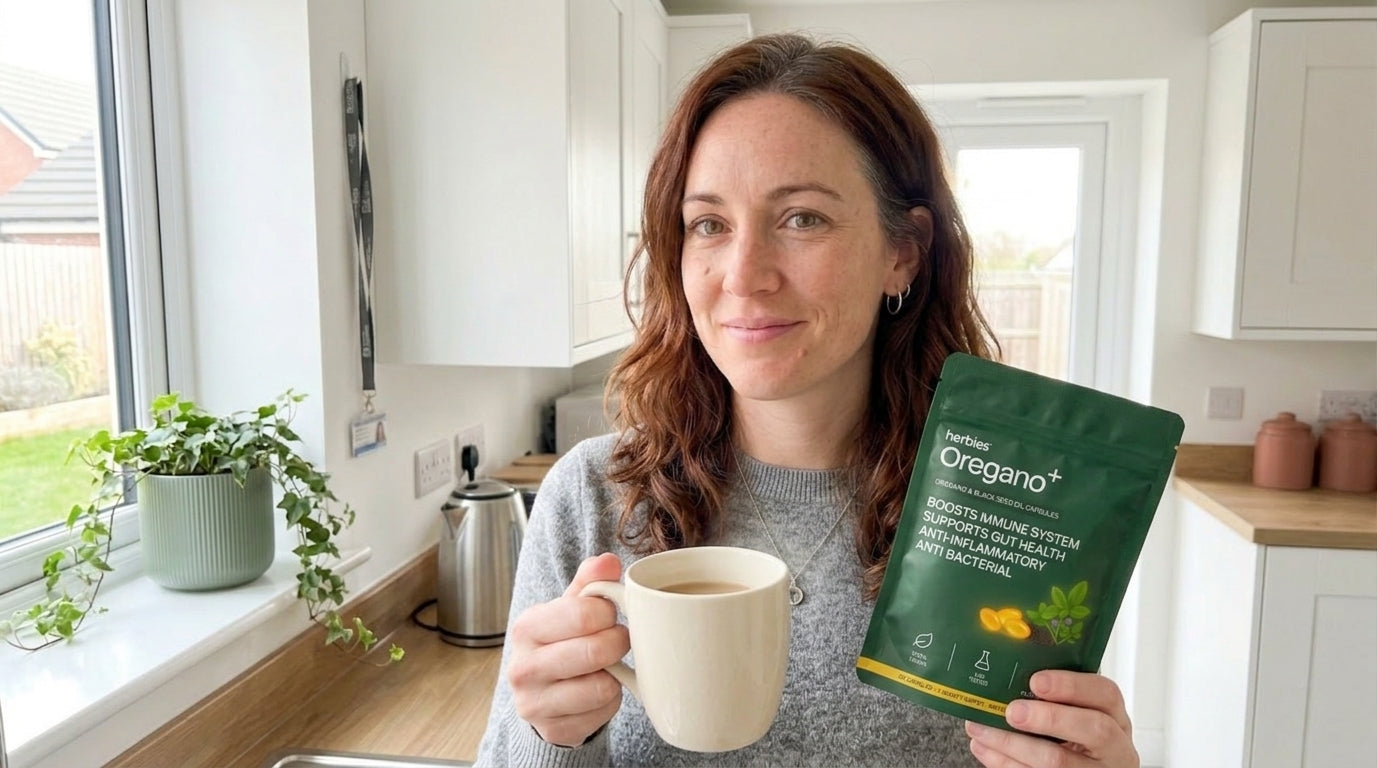
Herbies Oregano+ is one of the only formulations available today that puts both compounds, at clinically meaningful doses, into a single, simple daily softgel.
Each daily dose delivers:
- 6,000mg of wild oregano oil (a 20-to-1 extract concentration, the equivalent dose used in clinical research)
- A verified carvacrol potency of 70% or higher, independently lab-tested by HPLC, not just label-claimed
- Cold-pressed black seed oil, paired with the oregano in the right ratio so both compounds work together inside your gut at the same time
That's it. Two ingredients. No fillers. No animal gelatin (the softgels are vegan). Manufactured in a certified GMP facility, with independent batch testing to verify carvacrol potency on every production run.
How It Works Inside Your Gut
Once you swallow the softgel with water, the carvacrol dissolves the biofilm that bad bacteria have built around themselves. Once that shield is broken, the bacteria are exposed, and the same carvacrol eliminates them on contact.
But killing bacteria releases their toxic contents into your gut. That's where most natural protocols leave you stranded, with your immune system left to deal with the debris, which is what makes people feel worse before they feel better. This is where black seed oil takes over: the thymoquinone binds to the dead bacteria and endotoxins, calms the inflammation those toxins caused throughout your gut wall, and escorts the whole toxic load safely out of your body.
One does the work. The other cleans the mess. That's the whole formula.
This Has Already Helped Thousands of People Finally Get Relief
"I've had IBS for eleven years. Eleven years of being told to eat more fibre, drink more water, reduce stress. By day four my evening bloating was less severe. By the end of the first week I had the first proper, complete bowel movement I'd had in I don't know how long. I actually cried. I'm now on my third bag."
"I looked six months pregnant by 8pm every evening and nothing helped. After about ten days I wasn't bloated at the end of the day anymore. My husband even said “you seem different lately, less uncomfortable.” The constipation I'd had for years has basically resolved. I go every day now."
"I bought these for the bloating and constipation. What I didn't expect was the brain fog lifting. By week two I was thinking more clearly, less of that heavy, sluggish 3pm feeling. My digestion dramatically improved too, less stuck, less straining."
My daughter sent me a link after I'd complained about my stomach for the hundredth time. I'm a retired nurse and sceptical of big claims. Within two weeks my bowel movements had completely changed. Regular, complete, no straining, no “stuck” feeling. I've since ordered three more bags and recommended it to two colleagues.Patricia W., 61 — Verified Purchaser




Imagine Starting Your Day Feeling Like Your Gut Is Finally on Your Side

- ❌ No bloating building up through the day
- ❌ No straining in the bathroom
- ❌ No planning meals around what might “set you off”
- ❌ No choosing the outfit that hides your stomach
- ❌ No more doctor's appointments that end with a leaflet and no answers
- ❌ No more shelves full of probiotics that helped for a week and then stopped
- ✅ Just a gut that works, the way it's supposed to
That's what thousands of people have already found with Herbies Oregano+. For most people, the first noticeable changes happen within 7 to 14 days. That's less than two weeks away.
IMPORTANT: You Won't Find Herbies Oregano+ in Pharmacies, on Amazon, or Anywhere Else
And that's intentional. When a supplement goes through distributors, wholesalers, retailers and pharmacies, everyone takes a cut. By the time it reaches the shelf, the price has been marked up two, three, sometimes four times, and the brand either cuts corners on ingredients or passes the cost to you.
So Herbies sells directly to its customers. No Amazon. No retailers. No third-party sellers. Which means you never overpay for what's inside the bag, and every penny saved on distribution goes back into the formula: higher carvacrol potency, better black seed oil sourcing, independent batch testing.
What Does It Actually Cost?
If you go to Herbies' website right now, you'll find Oregano+ at its standard retail price per bag. Anyone who has spent months on probiotic programmes, or paid for an expensive gut test, tends to consider it genuinely reasonable for a formula that addresses the actual root cause.
But today you won't pay full price. Right now Herbies is running one of its occasional sale periods, and the current price is 30% below retail, which works out to roughly the price of a daily coffee. And most people find they spend less on gut health overall, because they stop buying the probiotics, the fibre supplements, the peppermint capsules and the antispasmodics they were cycling through. Herbies replaces that whole pile.
We back every bag with a full 90-day money-back guarantee. Take Herbies for 90 days, and if you don't feel a meaningful difference, less bloating, more regularity, lighter after meals, more energy, we'll refund every penny. No hoops, no “store credit only,” no being asked to prove you tried hard enough. We're not asking you to take our word for it. We're asking you to take 90 days and let your own body answer the question. Questions? Email help@herbies.co, ask them anything, and see how fast they respond.
Herbies is a small, independent company without the distribution or marketing budgets of the big brands. Their oregano oil is wild-harvested at a specific time of year when carvacrol concentration peaks, it cannot be rushed or grown on demand, and once a harvest batch is gone the next takes weeks to months. Every time they run a sale, demand spikes and stock runs low. If the link below is still active and showing the discounted price, there is still stock available.
You Really Have Two Options Here
Option 1: You close this page and go back to what you've been doing. The bloating continues. The constipation worsens. The heavy, sluggish mornings never improve, even after a good night's sleep. Maybe you'll try another probiotic, another round of FODMAP, another doctor's appointment. And the chronic gut inflammation driving all of it continues, quietly, slightly worse each year.
Option 2: You try Herbies Oregano+ risk-free for 90 days. Two softgels with breakfast. By the end of the first week, it's 7pm and you don't have that bloated belly. By week two, you're going to the bathroom properly, fully and comfortably, without the straining or the stuck feeling. Your energy improves. The 3pm crash eases. You stop overthinking every meal. And if within those 90 days your gut hasn't meaningfully improved, you get your money back. If it does work, you feel like yourself again, not because of a miracle, but because the bacteria driving the inflammation have finally been cleared.
Still Here? Still Thinking About It?
That's fair. Ask yourself why. If it's because you've been burned before, that's exactly why the 90-day guarantee exists, you don't need to trust this page on faith, your body tells you whether it works. If it's because you're not sure it'll work for you specifically, try it for 90 days and find out. Worst case, it doesn't, and you've lost nothing. Or you could be the person who finally stopped bloating after every meal, goes to the bathroom properly for the first time in years, stopped planning their day around their gut, and looks in the mirror and recognises themselves again. The choice is yours.


The information provided in this article is for educational purposes only and does not constitute medical advice. These statements have not been evaluated by the relevant regulatory authorities. This product is not intended to diagnose, treat, cure, or prevent any disease. Individual results may vary. If you have a pre-existing medical condition or are taking prescription medication, consult your healthcare provider before starting any supplement. Clinical studies referenced are publicly available peer-reviewed research and are cited for informational purposes only; citation does not imply endorsement of Herbies by the researchers or institutions named.
These sell out fast
Check availability